
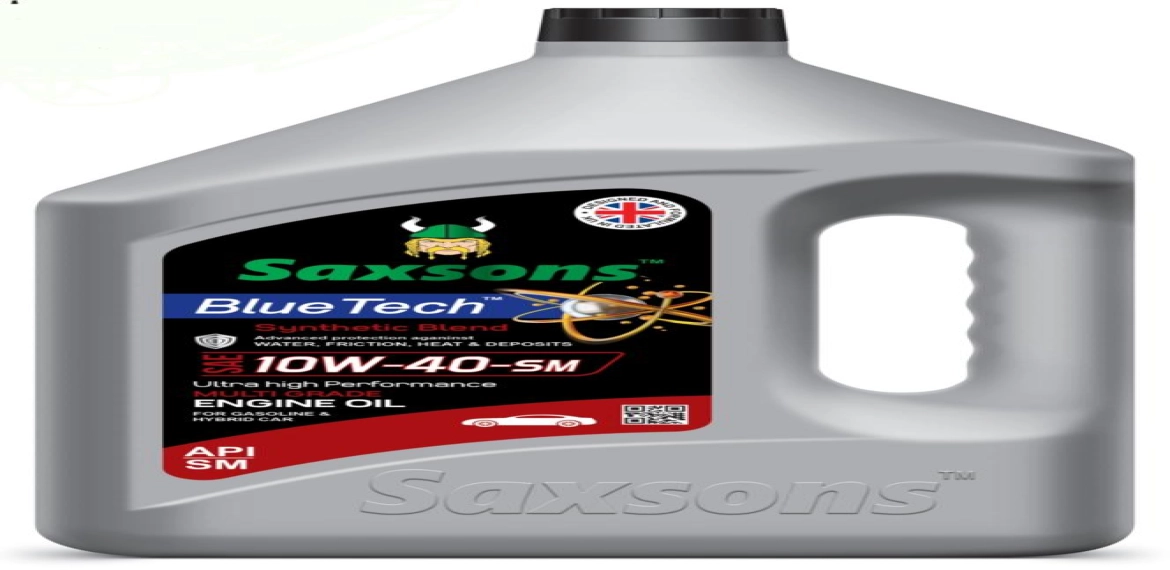

What Engine Oil Does:
1. Lubrication – Reduces friction between moving metal parts (like pistons, crankshaft, camshaft).
2. Cooling – Helps carry heat away from critical engine components.
3. Cleaning – Contains detergents and dispersants to keep dirt, soot, and combustion byproducts in suspension so they can be removed during oil changes.
4. Protection – Prevents corrosion and rust by creating a protective coating on metal surfaces.
5. Sealing – Helps maintain tight seals between piston rings and cylinder walls.
Types of Engine Oil:
a. Conventional (Mineral) Oil
• Derived from crude oil.
• Cheaper, but breaks down faster under high heat.
• Suitable for older engines or low-stress driving.
b. Synthetic Oil
• Chemically engineered for uniform molecules.
• Handles extreme temperatures better, lasts longer, flows better in cold weather.
• Often used in modern engines.
c. Semi-Synthetic (Blend)
• Mix of conventional and synthetic oils.
• Balanced cost and performance.
Viscosity Grades (The Numbers on the Bottle):
Example: 5W-30
• First number (5W) = Cold temperature performance (“W” for winter).
• Second number (30) = Thickness at operating temperature.
• Lower “W” numbers = better cold starts.
• Higher second numbers = better protection at high heat, but thicker flow.
Additives in Engine Oil:
Engine oils aren’t just oil — they have additives for:
• Detergents & dispersants – Keep engine clean.
• Anti-wear agents (like ZDDP) – Reduce wear on moving parts.
• Viscosity index improvers – Maintain performance over temperature range.
• Anti-oxidants – Prevent oil breakdown.
• Anti-foam agents – Stop bubbles from forming.
How Often to Change Engine Oil:
• Depends on oil type, driving style, and manufacturer specs.
• Modern synthetics: often 8,000–15,000 km (5,000–10,000 miles).
• Conventional oils: around 5,000–7,000 km.
• Always check the vehicle’s manual.
Common Myths:
• “You must change oil every 3,000 miles” – Outdated for modern engines and oils.
• “Darker oil means it’s bad” – Not necessarily; it means it’s cleaning.
• “Synthetic oil causes leaks” – Not true for healthy engines; it may expose old gasket issues.
Saxsons LTD produces all mono and multi grades engine oils combined with semi and or fully synthetic technology which is perfectly suitable for lubrication of petrol, Hybrid and diesel engines to provide increased protection in high, low temperature or extreme applications in all climate conditions.


COMMENTS (0)
Be the first to comment!
ADD A COMMENT